
Special Session 1: Balancing AI-Driven Safety and AI-Induced Risks in Integrated Nuclear Systems
Please submit your manuscript via https://easychair.org/conferences/?conf=icsrs2026 and select Special Session 1
Chairs




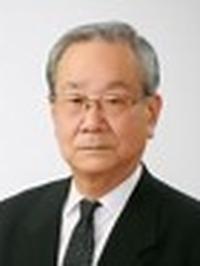
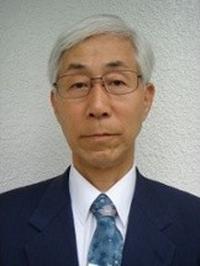
Brief Introduction
As a cornerstone of low-carbon energy, nuclear power is undergoing a digital transformation critical to achieving global dual-carbon goals. In the post-Fukushima era, the integration of Artificial Intelligence (AI) and Machine Learning (ML) provides a transformative framework for nuclear safety. To meet modern multi-sector energy demands, next-generation nuclear systems are increasingly coupled with other critical industries, such as hydrogen co-production, thermal desalination, and ultra-scale data centers. This cross-industry integration introduces novel, complex risk profiles and dynamic multi-system dependencies that require advanced safety, reliability, and cascade-failure evaluation methodologies.
This technological shift introduces a profound operational duality: balancing AI-driven safety against AI-induced risks. On one hand, AI serves as a powerful engine for safety enhancement, driving advanced prognostics, health management, and intelligent decision support to maximize system resilience. On the other hand, the proliferation of AI across tightly coupled industries introduces novel risk vectors. Systemically, it creates opaque, cascading physical and digital vulnerabilities across interconnected sectors. Cognitively, the integration of AI agents into digital control rooms fundamentally transforms human-machine interaction, giving rise to complex human-factors concerns such as human-AI trust miscalibration, degraded shared situation awareness, and heightened cognitive workloads during high-stress emergency operation.
Navigating this trade-off is paramount for the next generation of nuclear systems. This special session aims to bridge the gap between theoretical research and industrial application by addressing this precise equilibrium. To build a comprehensive safety framework, submissions are welcome across the entire spectrum of this duality: papers may focus solo on dedicated AI safety enhancements, solo on specific risk and human-factors evaluations, or on holistic frameworks that directly address the technical trade-offs between both. Researchers and practitioners from academia, research institutes, and nuclear utilities are invited to share innovations that ensure the long-term reliability, controllability, and sustainable development of integrated nuclear installations.
Sub-topics
• AI and ML applications in intelligent operation and maintenance for nuclear power plants.
• Prognostics and health management (PHM) of nuclear equipment and systems.
• AI-enhanced decision support systems for operational safety, alarm analysis, fault diagnosis, severe accident management, and dynamic emergency response.
• Human-AI teaming, shared situation awareness, trust calibration, and joint cognitive performance in advanced digital control environments.
• Safety, reliability modeling, and risk assessment of coupled nuclear systems (e.g., nuclear-hydrogen integration, nuclear-powered data centers, and multi-energy co-generation facilities).
• Reliability modeling and analysis of passive safety systems.
• Software verification, validation, and dependability analysis for safety-related AI algorithms.
• Human-system integration and cognitive ergonomics for advanced digital control rooms.
• Cyber-physical security, hardware-in-the-loop validation, and integrated risk evaluation.
• Probabilistic risk assessment (PRA), dynamic risk monitors, and source term release risk mitigation.
• Model fidelity, uncertainty quantification, and sensitivity analysis in intelligent safety systems.
• Nuclear fuel performance monitoring and advanced safety assessment.
• Digitalization, licensing frameworks, and standardization for advanced nuclear applications.